1st of the Month Wrangle: Is Airbnb’s “Direct Booking” Really Direct? with Orlie Benjamin and Eric Goldreyer

 Apple Podcasts
 Spotify
 Amazon Music
 Castro
 RSS Feed
 In this fourth episode of First of the Month Wrangle, presented by Lasoh, we are joined by Orlie Benjamin, Founder and CEO of Lasoh, and Eric Goldreyer, Founder and CEO of Savvy, to unpack one of the latest conversations surrounding Airbnb and direct booking.
Airbnb has been testing a program that allows some hosts and co-hosts to drive their own demand to an Airbnb listing in exchange for a reduced platform fee. The company may be calling it direct booking, but Orlie and Eric argue that the definition gets more complicated when the reservation still happens on Airbnb and the operator does not fully control the guest relationship.
That question opens the door to a much bigger conversation about what direct booking actually means, who owns the guest relationship, and what operators gain or give up depending on where that relationship lives.
Episode Chapters
00:57 - What Airbnb is testing with “direct booking”
05:53 - Is Airbnb’s direct booking link really direct?
08:30 - If you are doing the marketing, who owns the guest?
13:02 - Guest data, remarketing, and the customer relationship
23:30 - Why direct booking has a trust problem
26:23 - Why your guest list is part of the value of your business
29:05 - Owning versus renting the customer
30:02 - The opportunity in referrals and repeat guests
39:31 - Solving the discovery problem for direct booking
41:56 - How AI, AEO, and GEO are changing travel search
49:04 - Why there will never be only one booking channel
51:31 - Building around customer feedback and relationships
For vacation rental operators thinking seriously about reducing OTA dependence, strengthening guest relationships, and building more value beyond the next reservation, this episode offers a useful look at what “direct” really means and what it takes to build a business around the customer relationship.
Learn more about Lasoh:
Website: https://tinyurl.com/52nvyw8t
LinkedIn: https://www.linkedin.com/company/lasoh/
Facebook: https://www.facebook.com/people/Lasohio/61575721958679/
Instagram: https://www.instagram.com/lasoh.io
Connect with Orlie:
LinkedIn: https://www.linkedin.com/in/orliebenjamin/
Facebook: https://www.facebook.com/profile.php?id=61585160391720
Instagram: https://www.instagram.com/orlie.benjamin/
Learn more about Savvy:
Website: https://www.savvy.com/
LinkedIn: https://www.linkedin.com/company/stay-savvy/
Instagram: https://www.instagram.com/savvy_stay
Facebook: https://www.facebook.com/savvystays
Connect with Eric:
LinkedIn: https://www.linkedin.com/in/ericgoldreyer/
✨ Exclusive Offer to Alex & Annie Listeners:
Turn every guest interaction into more revenue with Lasoh.
Get 20% off Lasoh products with code AlexandAnnie. Valid through November 30, 2026.
👉 Learn more: https://explore.lasoh.io/alex-annie
#vacationrentals #shorttermrentals #directbookings
00:00 - Welcome to First of the Month Wrangle
00:57 - What Airbnb is testing with “direct booking”
05:53 - Is Airbnb’s direct booking link really direct?
08:30 - If you are doing the marketing, who owns the guest?
13:02 - Guest data, remarketing, and the customer relationship
19:04 - What professional vacation rental operators really do
22:21 - The true cost of distribution
23:30 - Why direct booking has a trust problem
26:23 - Why your guest list is part of the value of your business
29:05 - Owning versus renting the customer
30:02 - The opportunity in referrals and repeat guests
34:53 - How Savvy and Lasoh fit into the marketing funnel
37:38 - What actually counts as a repeat guest?
39:31 - Solving the discovery problem for direct booking
41:56 - How AI, AEO, and GEO are changing travel search
49:04 - Why there will never be only one booking channel
51:31 - Building around customer feedback and relationships
Welcome to First of the Month Wrangle
Alex Husner
It's the first of the month, which means it's time for our first of the month wrangle brought to you by Lasso. Every month we take one big idea shaping the vacation rental industry. And instead of just talking about it, we actually pull it apart. What's working, what's not, and what people aren't saying out loud. And we've got Orly Benjamin, CEO of Lasso, here to help us do just exactly that. Okay, Orley, let's wrangle it. Welcome to Alex and Annie, the real women of vacation rentals. I'm Alex, and I am joined today by Ginny as my co-host. Ginny, good to see you. And we've also, this is our first of the month wrangle presented by Lasso, and we've got Orley Benjamin, who's actually joined us for a few of these episodes so far in 2026. And we've got a special guest. We have Eric, who is the CEO and founder of Savvy, also a familiar face on the show. How are you guys doing today? Excited to be here. Thanks for having us.
What Airbnb is testing with “direct booking”
Alex Husner
Awesome. Well, this is a kind of a special one because this is a topic that has been pretty extensively chatted about on the internet since the announcement came up. And it is related to Airbnb and how they've decided that they want to instruct hosts or property managers that the way that they can do direct bookings is to just send the link to their Airbnb listing instead of creating an actual direct booking program. But that's kind of very high level. Orly, I'm going to throw it to you. What are the main facts that people need to know about this?
Orlie Benjamin
I think Airbnb has recognized that their own customers that are, you know, hosts and co-hosts are now actually a potential for marketing. And they've created what I would refer to as an affiliate program, but they're calling it direct booking. And so the typical platform fee that goes to hosts since October of last year is 15.5%. But what Airbnb is offering to its hosts, that if they want to actually start creating marketing on behalf of their own business and use a direct booking link, and I say direct booking link because it's not defined the same way that I think the professional part of the industry would refer to it as that URL that goes directly to Airbnb, not to an operator's own platform, would then result in a reduced platform fee. So it would save the 9.5% because it's only a 6% fee instead of a 15.5% fee.
Eric Goldreyer
Six to 10, by the way. Six to 10. So thank you. Thank you, Eric. For those people that think it's going to stay at the low end of the spectrum, they haven't been paying attention to what Airbnb's been doing with their fees. But yeah.
Orlie Benjamin
My attempt was to be very fact-based before I bring my opinions in. But as Eric got started, we're going to start.
Eric Goldreyer
No, but factually, factually, to be fair, they're testing six and ten percent. Correct. So I just don't want people to think that it's necessarily nine percent less.
Alex Husner
Well, I remember years ago, Airbnb was only three percent. So for regular property managers, so yeah, a testing bid for sure.
Eric Goldreyer
I didn't mean to interrupt you.
Alex Husner
Yes.
Orlie Benjamin
No, Eric, I'm glad you did. And to say it differently now that I'm bringing in opinions, it's only two to three times more than what it used to cost a year ago if you start doing your own marketing.
Jinnie Randolph
I also thought it was um, you know, interesting when we were all kind of chatting about this off-screen, that we've all heard about this because it to Alex's point, like it's been a hot topic of conversation on LinkedIn and on different, you know, hosts and property manager groups. But we also discussed the fact that Airbnb themselves have not really officially publicly published this, that the 6% versus the 10% is coming from hosts who have received this email about this beta program, which I think also introduces for the next conversation an interesting dynamic of the fact that Eric, I think you and Orly both had uh some some interesting hot takes on kind of how, not just the fact that Airbnb was testing this, but how they have communicated, to whom they've communicated, what rates they've communicated to whom, which I think just kind of fuels the fire for why it's been such a hot topic of conversation um across the internet so far. So I'm excited that we can kind of dive in and hear more of uh both of your perspectives on on the topic.
Eric Goldreyer
Sure. And I think it makes sense, right? They're not gonna, if you're Airbnb, you don't want your customers to try to find and use this link because you're just giving up margin. Airbnb wants the property manager's customers to become their customers, and they want the property managers to give this link out to their guests. So you're not gonna see Airbnb publishing this out to the demand side of the marketplace. It's just gonna be to the supply.
Alex Husner
Yeah, and I and I think the conversation really comes down to okay, who is this a good fit for? And when we all chatted on this topic last week, we talked about, you know, uh if these hobbyist hosts are people that they just have one or two properties and they're new into this and maybe they're not, they're likely not in all these LinkedIn chats, like we all are about this. You know, they're just trying to navigate the waters of figuring out, you know, using the platform, the basics of hosting, keeping the property, you know, up to speed and taking care of guests. But are they really, you know, looking at direct bookings? Do they know the direct bookings are something they need to be doing? And maybe if they've heard of it, does this just seem like it's the easy way to do it? Because they don't want to go and spend a bunch of money on getting a website and all those other things. But I mean, how do how do you see it from your perspective, Orly? And I think you're an interesting one to ask about this because you know, besides the business that you've built for property managers that isn't just for small hosts, it's for companies of all size, you are an individual host. That's how you started, that you had a couple properties. So, what would you have thought if you had seen this come out a few years ago?
Is Airbnb’s direct booking link really direct?
Orlie Benjamin
So I'm an owner operator of uh my own vacation rental business. I'm a prior Fortune 500 direct-to-consumer marketer. So I'm a little bit biased. And I'm also the uh founder of a marketing technology solution. If I was an owner operator that did not have chops or comfort with marketing, I would probably find this interesting because it can feel intimidating to have a business that's entirely reliant on a distribution channel and then try to build the muscle around direct-to-consumer marketing because there's some things that go into that. So I think there's a bit of a positive spin that can be taken for that operator that doesn't have the background in knowing how to start direct-to-consumer marketing. But this is an opportunity to treat this. I'm gonna call it an affiliate link. I wouldn't, I don't think I should refer to this as direct booking, just so we don't get confused during the podcast. This affiliate link to me is an opportunity to create a proof of concept of if driving your own demand has value without having to set up a PMS, without having to set up a direct booking site, without any of the work that comes into building the muscle to being a direct-to-consumer business. So I almost in a way see this as a great gateway opportunity for anyone that's not doing any direct marketing to test into it. Any professional operator that has their own direct booking site that has commercial and direct-to-consumer capabilities probably would look at this. And I've already seen the chatter on the internet, and it's the the real response is this is not direct booking because it's not. It's not direct. You don't own the customer relationship, you don't have any of the data that comes in through Google Tag Manager and you know, G4. And so the definition of direct booking is control and data. And none of those things happen with why I'm referring to it as an affiliate link. So, me, I'm biased, right? I would not be excited about this, but I also have the experience and the infrastructure around marketing capabilities that I wouldn't need this. And so I'm trying to be an optimist and recognize that for a certain type of operator that hasn't gone to direct booking in the tr in the real way yet, this is a gateway. And it'll be really interesting to see if any of those operators actually segue into truly doing direct booking because they saw an ROI and putting a little muscle behind, putting some marketing behind their own product. That said, I think for anyone who's a, I would refer to as a sort of a, as Eric has referred to as a savvy operator. I think any savvy operator out there recognizes this is not direct booking, it's an affiliate program. Eric, what would you add to that?
If you are doing the marketing, who owns the guest?
Eric Goldreyer
You know, the one uh, and I wouldn't even say it's a disagreement, but the nuance I would say in in your comment, Orley, was that, you know, you said for someone that doesn't isn't good at marketing and direct marketing out to their customers, I mean, that's who this is built for. If you're not marketing, then you don't have anyone to give a book direct link on Airbnb, which isn't a book direct link to. So to me, if you're a property manager of any size, two properties or 2,000 properties, if you're out marketing, you're already doing the hardest part of the exercise, and that is finding the guest. And I think this is all about is it gonna be your guest as a host or is it gonna be everybody's guest? So, you know, if you're out social email campaigns, freaking flyers at the, you know, the Chamber of Commerce, which is so, you know, 1990s. But if you're doing anything to market and then you're giving your customer over to uh a middleman, I think it's uh it's certainly a disservice to your business in the long term. I could see where maybe people want to try it short term as a quick stepping stone, but don't think of it as I'm paying six or 10% instead of 15. Think of it as that rebooking that you would have gotten from that guest that loved your place because of the level of hospitality that you provided. You're not gonna get the direct reservation next time because they're now an Airbnb customer. So you're paying that fee every time.
Orlie Benjamin
Eric, I wholeheartedly agree with you. And the only value I see is for someone who never put in the infrastructure to build the direct booking site and set up the infrastructure, that this becomes an opportunity to test into it before going and doing that. And if someone continues to do this and gives away 6, 10% instead of 15, the math should math real quickly on why that doesn't make sense, solely from a financial perspective, not even including the distribution control and customer data and this, you know, missed business control that comes from that. So I agree with you entirely. I was only saying that I think the silver lining is if you haven't at all done anything, use this as your first step. And if you have done something, then you already know the system.
Eric Goldreyer
I would even add to that when you say as a first step, truly is a stepping stone. Like, man, I need this up today because I'm new to the industry and I haven't been to Verma or I haven't watched 30 episodes of Alex Amy, there are dozens of providers in our industry that can get you set up with credit card processing. I mean, a website. This is not rocket science. This is easy stuff. So, yes, if it's gonna be a hobby for you, okay. Okay, if you're a gig, you want to be ripping your place out while you're surfing in Costa Rica or you're doing the Dola mines, okay. Maybe, maybe you don't want to have to deal with the credit card processing, et cetera. But if if this is gonna be something that you're doing, you're gonna play, you're gonna pay two to three X on the initial reservation and you're gonna keep paying on every subsequent reservation. So it's definitely not smart for most hosts. Alex, when you asked who's it, who's it the best for? It's the best for Airbnb, obviously. They're able to grow their fly. I mean, this basically gets the supply or hosts, property managers, to help build the flywheel at Airbnb that hosts want to get out of. So it's a little bit of a conundrum.
Alex Husner
Yeah, and I mean, the lowest hanging fruit, I feel like, is if you're a host that doesn't have any true direct booking plan or the elements that are necessary for it, if you've got somebody like me who I return to certain destinations um and want to rebook the same property, that's you know, not a bad, not a bad way to do it. But I just wonder, and I'm gonna pay attention next time I rebook at this one condo that we stay at, if she if she's sending me a link that I would even know a difference. Uh I mean, like how how that is actually working. Like, is are they supposed to just send it send the link back through to somebody in the chat and that's gonna ping it that it is a quote unquote direct booking for the for the host?
Eric Goldreyer
No way, because that's already they don't want people that are already on the platform to get a lower rate.
Alex Husner
It's it's when you she would have to be getting my information outside.
Eric Goldreyer
Yeah, she's gonna have to go download the the the link in his or her uh dashboard at Airbnb and then send that out to his or her customers.
Guest data, remarketing, and the customer relationship
Orlie Benjamin
But that's why the PMS captures things like phone number, potentially email address. I mean, that's why Lasso is literally built. We integrate into the whole ecosystem so that every bit of guest contact information is automatically dropped into a system. And then you can automatically do follow-ups outside of Airbnb if you actually want to do direct booking correctly. So I think the only use case that I see, I see two use cases, one, in your case, Alex, where they just send, they send you the link through the Airbnb chat for the Airbnb rebooking rate, or they send it to you via text or via email if they've gotten your email address off platform. And then the second use case I think is that's interesting is the creator economy, right? If you happen to start working with, but if you're doing that, you're just doing marketing. Like, why wouldn't you just drive it to your own environment? Like to me, if you're investing in influencers, unless influencers are literally like pay me and I'll, you know, I don't know, that even the creator economy doesn't make sense. Yeah.
Eric Goldreyer
Spending the money, not getting the the direct, the actual direct booking.
Orlie Benjamin
And I mean, let's not I could see it being used, but it doesn't make sense.
Eric Goldreyer
Let's not overlook. Haven't seen how the T's and C's that Airbnb change for this link. But Airbnb strictly prevents and prohibits hosts from using this information to remarket. That's one of the big things, right? That's the difference between a true direct booking and a middleman or an OTA is who owns the customer and the right to remarket to that customer. And traditionally, Airbnb has been, you know, no, that's that's our customer. So there's one thing, which is getting the contact information, which yes, PMSs can do. You can QR code at your property, whatever it is, uh, but they don't want you doing it. And so giving them your customer, and then they're like, yeah, okay, hey, thanks. And by the way, don't reach out to that person again is crazy. Whether it's savvy or others, there are other direct booking marketplaces where a property manager doesn't have to have a website to get a direct booking. So if you're gonna send someone to a link, don't send them to a link where there's a middleman that owns the customer and holds on to the cash until after the stay and blah, blah, blah. Send them, send them somewhere where it's your customer and you get the cash immediately and it's your purpose of conditions.
Orlie Benjamin
Eric, this sounds like a great customer prospecting opportunity. You just need to figure out where all those links are and then automatically message those folks and say, hey, listen, for a way smaller cut, you can join our marketplace and you get all the customer data, right? Yeah.
Alex Husner
And then they're gonna need an app to be able to keep the customer data somewhere. So I think go to go to Lasso. That's right. Actually, I want to throw this question to Ginny because Ginny, you've you've worked with, I think it's it's one operator but or one owner, right? That they have a couple properties and you've shared, you know, with Annie and I some stories of just what you've seen of, you know, people that are just completely wet behind the ears as far as how all this works. But what's your take on this? Because you've kind of worked as like the middleman kind of co-host for some of these properties. Like, what would the people that you work for, what would they think of something like this?
Jinnie Randolph
Yeah, I mean, I think it it goes back to what both Orley and Eric were saying about who I think it's really designed for. And it is exactly like the operator that that I work with locally, um, is more of a co-host model. They do not have software. Their website, which I will not necessarily call a direct booking website, is literally a one-page website with like a very two-sentence description and a link to their Airbnb listing. They do get some, you know, inquiries through that website. They don't invest a lot in marketing. And I think that something like this for an operator like that who has explored technology, but you know, it's not their full-time business. That they're, you know, the operator I've worked with locally, um, she's a pediatrician as her full-time job. She runs her own pediatric practice. So I think that's not uncommon in the industry right now, especially when you're talking about hosts and co-hosts. So I do think that Airbnb saw an opportunity to kind of capitalize on maybe some of those behind closed doors bookings with people who don't have a direct booking strategy. And I do to Eric's point, I think that this is a really great opportunity for some people like that to get a taste of what that could be like and then hopefully understand that if they want to actually build a real direct booking business strategy, that it requires things like a direct booking website and their own kind of payment processing and a marketing program. Because I think that's one of the things that we, you know, have collectively talked about is it can be beneficial maybe to a host like that to have a link to share with people, but only if they have somebody to share it with. Um, and if you're not doing any marketing, who who are you gonna who's who is there to share it with? So it'll be interesting. And I'm kind of curious, you know, we kind of got got started talking um last week when we were off camera about this. And I do see, I think we're kind of getting here, like there is maybe a potential upside to those in the the professionalized side of the industry who don't really fit the coast the co-host host business model um in terms of like like making the the phrase direct booking. All of us, I think, in the professional industry have been beating that drum for for years because we've seen the benefit and a lot of people have adopted it. But there are a lot of people who don't quite yet really understand what a direct booking is. I don't know that giving people a direct booking link that's really an affiliate link, like to Orley's point, is gonna help educate. But I'm really curious, Eric and Orley, what the two of you think about is there a potential upside, even if this isn't necessarily a super relevant business strategy for a manager who's more professionalized to take advantage of themselves? What's what what could come of it for those managers, even if they're not using this strategy?
What professional vacation rental operators really do
Jinnie Randolph
I have I have two silver linings.
Orlie Benjamin
I see, Eric.
Jinnie Randolph
Do you want me to go first? I saw you.
Eric Goldreyer
I touched my nose. That means you're right.
Orlie Benjamin
Okay. All right. So, first of all, I think there's value in I'm gonna refer to the the group of people we're talking to as hosts, right? So I think there's value in both hosts and co-hosts trying it and realizing how hard it is, right? It's one thing to just list on a channel, it's another thing to drive demand. It's you know, it's the same reason if you look at other industries why direct-to-consumer versus CPG makes sense. The Proctor and Gambles of the world recognize that they only want to be in the product business, they don't want to be in the retail business. They give all their product to all the retailers of the world and all they are is product. And so I think that's a very similar parallel, which I think it would help hosts appreciate that the distribution side of the business, not just the managing and the building of the product, but the distribution side is just as hard, if not harder. And I think the second silver lining is that when professional operators are looking to take on inventory from hosts and those hosts have tried it, they now actually can appreciate what a professional operator is doing beyond the day-to-day operations. Because if we want to break down really what a professional operator does, it fills it fits in three buckets. The first is when I would say operating, I mean everything from inventory management for supplies to cleaning the property to maintenance events. Okay, we'll call that asset management. The second is a financial stewardship component. That's everything from trust accounting to running the math to making sure that the seasonality of cash flow does not result in a scenario where the business is upside down. It's not only profitable, but it's seasonally seasonally playing out. And so that's sort of the financial stewardship bucket. And then the third is driving demand. And I would put revenue management and marketing in that bucket. And revenue management and uh marketing are really peanut butter and jelly complementary sort of capabilities because revenue management is what price should the product be? And marketing is how do you create awareness for the product? And if you do it right, you drive demand to the right price and everything works really nicely together. This is actually the topic I'm speaking on, and I'm sorry, I'm facilitating a session on this topic at Burma in a couple of weeks, because a lot of professional operators definitely have revenue management capabilities and some of them have marketing capabilities. And so for a host to do all three of those things well, very unlikely. They're probably only doing bucket number one well, which is making sure it's cleaned, making sure it's maintained, maybe making sure they're like not in the red financially, but probably not maximizing the opportunity. I think the demand and the commercial side is really where the host probably does not do as well as the professional operator because it's so many hats to wear. And so I think that going and tasting. How hard it is to drive demand would actually create a good argument for professional operators to say, see, there's something you're paying me for, and it's hard.
Alex Husner
Do you think that this changes the conversation for professional property managers with owners at all? Because I mean, a lot of property managers mark up the rates to cover the commission. So does this does this change anything for them?
The true cost of distribution
Orlie Benjamin
I don't think it does. Eric, disagree with me. I mean, I think you're always paying for distribution in some way. You're paying 15.5% when you rely on a distribution channel. You're probably paying somewhere between four and eight percent if there is a real marketing capability and a tech stack and some fractional commercial skills. It's always cheaper, almost always if you have some scale of properties, like I don't mean one, but if you have some scale, it's always cheaper to in-house this than it is to go on distribution. And so I I actually think I actually think it's an interesting thing to say, which is why don't you try how hard it is and see here, let's see how much traction you get through this affiliate link. And it and you save 9%. Like, is it was that worth your time?
Eric Goldreyer
And it's not really how much traffic they're gonna get through the affiliate link. It's just how much traffic is their marketing gonna get. The hardest piece is the marketing, right? It's getting eyeballs, it's getting awareness, and it's it's building trust in that, right?
Orlie Benjamin
Because the link is only as good as where it goes.
Why direct booking has a trust problem
Eric Goldreyer
The one thing, the one thing, in my opinion, that this brings to hosts is trust, right? Because who the heck is this property manager? They got three properties, they've got a crappy website with two lines of description, as you just mentioned, and they want me to give them my money. Oh, I'm booking IBB? Okay, okay. That's that's the one thing where it's smart because the reason we exist is because property managers have been trying to drive direct bookings, and yeah, we all know what direct bookings are. We all go shop on Google for air and car and hotel. And once we find the the rate we like, we then go directly to United or you know, Southwest Airlines or we go to Hyatt or whatever. We know what direct booking is, it just doesn't work in vacation rentals because there's tens of thousands of brands. There's not a dozen. And we don't know who they are because we've, you know, we've never been to Napa, California before. So Napa vacation rentals means nothing to me. I don't know how long they've been in business, do they have good ratings, how many properties do they have? Do they do a good job? So, you know, the the the thing is, is as an industry, if we want to move share off those guys, those guys being Airbnb and Virgo, we've got to give travelers a trusted place to do discovery and book that's a direct. And Alex, when you said, you know, what is that what does that change, right? If I'm I'm over here paying full boat on Airbnb, but then I've got these direct bookings, I mean it it should be less expensive. I mean, who's getting that money? Hopefully it's going to the traveler so that they're then getting a nicer place that that property manager has, or they're staying an extra night or whatever, right? I mean, if the if the money just disappears, it's like, okay, well, what was you know the benefit of that? If if if it's a net zero to me as a property manager, I'm gonna raise my rate 15 and a half percent, or I'm gonna raise my rate six to 10%. But it's just the cost that the traveler is picking up. You're sort of in that scenario, you're net zero. But what you're doing is you're making all your properties more expensive when you raise the rates 15 and a half percent, right? Because that means that now the properties that I manage aren't as competitive with other properties. A chunk of that money is going to the platform that could have gone to a nicer stay or a longer stay or bringing in a chef or bringing in a yoga instructor or whatever. So it's it's funny, you you hear from a lot of property managers that are like, yeah, well, I don't care. I passed that cost along, doing a little bit of a disservice to your customer in that scenario, right? You're forcing them to pay more to a platform where they could have just truly booked it direct and used that money to have a better stay with their friends
Why your guest list is part of the value of your business
Eric Goldreyer
and family.
Orlie Benjamin
Well, and also part of the intellectual property of being a property manager is a Rolodex. And so if you only think about 15% as a platform fee or, you know, whatever the cost is for the infrastructure to be able to create direct bookings or other platforms that have lower fees, that is one part of the consideration. But the other part of the consideration is the intellectual property around building your book of business. If you go buy any business, I mean, there are publicly traded companies that get broken apart and the list is what's the data. Yeah. Exactly. So, you know, it's not just about the transaction cost, it's also about the overall ability to drive recurring revenue from an existing list of customers that has a recurring revenue stream. And that's arguably as valuable, valuable. I want I want the math to math on this. So there's some really big case studies that need to be built here, which LASO is planning on doing, but it takes time to build that data. I would argue that's as important as the transaction difference because recurring revenue is the best type of business model.
Alex Husner
You hear us talk about this all the time. Everyone wants more revenue, less OTA reliance, and better guest experiences. But most property managers and hosts are still piecing all of that together manually, either across multiple tools or no tools at all. That's exactly why we like what Lasso is doing. They've built the industry's only AI-native guest marketing platform to help operators increase revenue per stay, stays per guest, and booking conversion rates. And they've just launched Marco, their new AI marketing agent, to help operators put that guest data to work more efficiently. So instead of just getting the booker's info, you're capturing data from every guest in the stay. Instead of sending generic messaging, you're delivering personalized experiences. And instead of hoping guests come back, you're building a system that helps turn one-time bookings into repeat guests. And when you know more about every guest, not just the person who booked, you can create smarter opportunities for upsells, add-ons, and experiences that actually feel relevant. That's where operators can increase revenue per stay without making the guest experience feel overly salesy. That's the secret sauce. It's all powered through Lasso's smart marketing and guest portal products. If you want to check it out, Lasso is offering Alex Nanny listeners 20% off Lasso products when use the code AlexandAni. This offer is valid through November 30th, 2026. Learn more at explore.lasso.io slash Alex dash Annie. That's explore.lasso L-A-S-O-H.io slash Alex dash Annie.
Owning versus renting the customer
Eric Goldreyer
We talked about the lifetime value before, right? It's like, okay, are you building a lifetime value of a customer or not? Are you renting them every single time? And most property managers, hosts, are used to renting customers from Airbnb. They they realize they pay, you know, 18.5% all in, 15 to 20 to get that customer. But then they're renting them again and again and again. And what's happening when they have their own customers because it's repeat, it's word of mouth, or it's marketing that I as a host did, you can build a lifetime value of that customer because you can remarket to them and you can show them a great time and give them true hospitality. And then, you know, they don't stay once, they stay two times on average and they recommend to other people. And, you know, you get this value creation. And you're only paying your credit card processing on that transaction. You're not giving up this ongoing fee to rent that customer.
The opportunity in referrals and repeat guests
Orlie Benjamin
Eric, your point around referrals is one that I think is not talked about very much. If you're gonna have a referral program, have it be through your customers and give them something for it. Don't have Airbnb own your customer and still charge you, you know, more than it would cost you if you just did it on your own. So I think that I actually, this is one of the things that Lasso is seeking to solve is the referral component. I bet Savvy's gonna do something with this too, which is too smart not to. But the referral piece is fairly untapped right now because I think a lot of the operators forget the referral, they're not even getting the rebooking. They're not building the relationship with that guest to allow either a rebooking or a referral to happen. And I want to also touch on what Eric said, which is trust. Ultimately, when we break down what Airbnb is, it's a trust economy. People are more comfortable shopping on Airbnb because they feel that if something goes wrong, they have an exit strategy for something that's really important, which is a vacation, right? Not only do you spend a lot of money on vacation, you only get so many of them. You can't just replace it. It's it's kind of one and done. And so the only way for operators to really not only enable direct bookings, which requires some level of systems and capabilities, is actually to be trustworthy. And there has to be social proof of being trustworthy, whether it is your Google Business Reviews or your listing on savvy or your Instagram page and the commentary or local media articles, whatever it is, creating the infrastructure around trustworthiness and social proof is super important. One of the most important things Airbnb does is the rating system. Other, I mean, if you strip away the rating system, Airbnb is it's more of an inventory page without curation. And that rating system is really important, but there are alternative ways to get that social proof to exist on the internet.
Alex Husner
Yeah, for sure. And I think you hit the nail on the head, Orley, that it's like, you know, the people that are going to be most likely to book your property are probably going to be people similar to the people that have already booked the property, either demographically or for the reasons that they're coming into the town or the destination. So the referral thing makes a lot of sense. And I think you're right, there's, I think everybody knows there's a benefit there, but there's never really been a platform that's that makes doing something like that easy. But I think that's that's a big part of it. And, you know, the social proof in clients that I've worked with and that I still work with, as far as you know, helping with their marketing, user-generated content is huge. And it's like if you if you post a picture of going to Myrtle Beach and I'm on Facebook, but and I see that you had a great time here. I'm not necessarily planning a trip to Myrtle Beach right now, but when I want to do that in two months, I'm gonna remember Orly was just there. I should ask her where she stayed. You know, so it's like trying to, you know, get more out of your guests, not just a regular review. That's great. But what else can you get out of them? I mean, if if you get them to share a picture from their stay and you know, let their friends refer it. There's so many more things that can be done that are a little bit more creative and take a little bit more time. But, you know, at the end of the day, I think part of the issue that is causing some of this is that people don't really understand the cost of the Airbnb booking, whether they're passing that on to the owner or to the guest, or they're you know, swallowing it themselves. When you add up what that 15% is over the course of the year, that's money that you could have invested into your own platforms, into your own marketing team. And that's kind of where the whole idea for this episode came about, because Orley, you had a perfect point. You said, you know, why build Airbnb's marketing team? Build your own. You know, like that's basically what they're asking us to do is, you know, we're basically working for them. And, you know, that's not the best, safest business route, as we've seen in the past, that when they make changes or if there's a disaster, you know, that it can be you know disastrous for the people, that that's the only way that they're able to get business. But and I do also believe, though, that the trust thing is big. And I see this with with large vacation rental companies, that if their site is not up to you know, snub as far as user experience, guests will find the property on their direct site and then go book it on Airbnb for more because of what you just said earlier, that they feel more comfortable doing that. And I think the same, the same is for sure the case for small hosts, like Jenny mentioned, that if they, if the site looks like it's a rinky dink site or they only have one property or just a couple, you know, you you worry about that because what if something happens and now, you know, they they can't give me another place to stay. So the trust part, you know, that's that's going to be a hard thing to get around. But you know, that the low-hanging fruit is for sure trying to find those repeat guests, trying to find the referral guests, people that are like your current people that have booked the property that are most likely to want to stay in your property.
How Savvy and Lasoh fit into the marketing funnel
Orlie Benjamin
Well, that's why savvy is, you know, I'm speaking on your behalf, Eric, but I think that's why savvy makes a lot of sense because they have, you know, a really well-built e-commerce infrastructure that costs hosts nothing except for a reasonable fee and results in them having their own customer and guest contact information coming through. And that's part of why I think LASO makes sense, because we've built the infrastructure that allows for the management of the guest data and the reactivation of the guest data. And the next thing we're building is the loyalty program. It's the last thing on our roadmap before we feel like our CRM infrastructure in terms of the current vision is done. And so if you really think about the overall marketing funnel, Savvy is really helping at the top of that funnel and Lass was really helping at the bottom of that funnel. And we're not the only businesses out there that are doing it. There's a whole world of software out there that's trying to do this and consultants and professional operators are already doing it. It's just that the longer tail of the Airbnb ecosystem might not even know it's an option. And so I'm a little bit of an optimist. I'm actually hoping this concept of direct booking, which by the way, I think it's very intentional that they haven't created a whole, you know, campaign because all these guests will start looking for direct booking as a concept that they've never thought of. But I think it's very possible the direct booking thing may backfire. And now these hosts that never even had the idea that they could do a thing might learn that they could go do a thing and then they might go do the thing on their own. And this whole affiliate program actually becomes a gateway drug to true business sophistication and direct to consumerization.
Alex Husner
Yeah, for sure. Jenny, any thoughts from your side?
Jinnie Randolph
Well, I'm just I'm just curious. I love the conversation around the difference between owning the guest and renting the guest. And we've talked a lot about, you know, the difference of like the cost structures between the six and 10% and what it actually costs to run a marketing program. But I'm kind of curious to flip that a little bit because really one of the things that we're talking about is even if somebody does go to Airbnb and books through Airbnb the first time, uh, for exactly what we just talked about, because they they aren't really sure that they trust the management company yet. But once they've stayed and been able to establish that trust, I feel like there's a whole other equation. And Orle, you kind of touched on it. And I feel like there's probably a case study in your in your near future that that talks specifically about this. But for a manager who's never tried to really calculate what a repeat guest is worth, how would you recommend that they sort of start that process? Um, because I feel like there's a we talked about the cost side of the equation. Let's talk about uncovering the value here.
What actually counts as a repeat guest?
Orlie Benjamin
Well, I think the first thing you do is you define guest. My opinion of the definition of a guest is not just the person who booked the stay. It's any single person that stayed at the property. And so the best way to measure a repeat guest is to actually have enough data around who has stayed at the property to then attribute any of those guests, regardless of they're the one that filled out the form online, to a future booking. The second stage is to then have that data in a way that is organized and then be able to automatically flag a moment where one of them is back and do it in a way that is automated, ideally. You can do it manually. I would never recommend that. It's too much work, but automatically have it be identified and then ideally have your system tell you that and do something about it. And I think this is where loyalty also comes in, too, right? Like, how can you reward people that have been loyal to you in some way, whether it's a small note or offering them an early check-in because it's available and it costs you nothing, or dropping a bottle of wine and um making something special, that that $10, $20 investment on a, you know, possibly several thousand dollar ticket is sort of a no-brainer. So I think it starts with data and then it starts with leveraging systems that are able to do something with that data and then not just knowing, but making the guests feel like they're valued. Because ultimately, if you know they're a repeat guest and you do nothing to manage the relationship with the guest, how valuable is that really?
Alex Husner
No, I I agreed. And I think, you know, Eric Orley, you've done a good job of pointing out in this conversation a couple things related to savvy. And I just wanted to throw this one to Eric to so he could expand a little bit. But how does a marketplace like Savvy kind of serve as that stepping stone between the OTA dependence and actually having the direct booking strategy? Like what does it actually look like?
Solving the discovery problem for direct booking
Eric Goldreyer
I think it's compatibility, right? I mean, all property managers, in our opinion, need to have a way for their repeat and word-of-mouth guests to rebook directly. Because that's where most of it happens, right? We're we're all very lucky that we we get to work in an awesome industry, which is hospitality. And guess what? Travel sexy. People talk about their trips. What do you do when you get together with your friends that you haven't seen in a month at happy hour? Oh my gosh, I just went to this amazing place on the beach here and we stayed in this vacation room on blah, blah, blah, blah, blah. And this is who we booked it through or whatever. So word of mouth and repeat is uh sort of, you have to have a book direct ability for that. But it's the discovery that, you know, as a traveler, I'm not gonna go open 20 different browser tabs in a mark and look at 10 to 30 different properties on each different one to try to compare uh availability and rates and descriptions. I want to go to one place. I mean, I'm in the industry and I'm not going to 20 different websites when I'm traveling somewhere. So what we're trying to do, and I think we're making good progress, is create that alternative for travelers. Because until someone gives them a way, and AI is going to help it, but until someone gives travelers a way to do discovery at scale, meaning they can go to one place they trust and find what they're looking for, but then not book with a middleman and pay an additional 15 to 20%, but they can book direct. So it meets the needs of the host and it meets the needs of the traveler. We think that's the win. And to the degree that Airbnb's out there driving incremental reservations to a property manager, more power to you. We would never tell anyone to get off of Airbnb or VRBO for that matter. Our point is just, hey, all you people out there talking about you want direct business, you're banging your head against the wall if you think you're going to be able to do it on your own, because that's not how travelers search. So we're trying to build that place where we get, you know, all the property managers to list all their inventory for free so travelers can find it all. And then when they go to book, it's the terms and conditions of the property manager and they hold the cash immediately. It's not earning Airbnb, you know, extra money on the float sitting in their account, et
How AI, AEO, and GEO are changing travel search
Eric Goldreyer
cetera, et cetera.
Orlie Benjamin
I would just add to that that the world is also changing a lot. And so the world of SEO has now one, has now become one of AEO and Geo. And so that one place where people are going to was probably a couple of places historically, whether it's Google, maybe they're starting on Airbnb, maybe they're starting on a different search engine. And now there's more places. And a lot of people are starting to have these very tight relationships with their favorite LLM engine, whether it's Claude or it's chat. And so it's just another place where everyone is starting to ask questions. I think the most recent statistics I saw are about something like seven or eight percent. Search is actually now in LLMs as opposed to sort of a traditional search engine. And so what is becoming just as important is not just having a marketplace matters, but so does content because everything is now about context. And so that AI capability, whether it's even Gemini through Google, is all going to be about how specific is the search of that person and then how quickly can the right place be matched off of those specifications? And it doesn't matter if it's a marketplace or if it's a direct booking capability, it's about how that gets mapped. And so if someone's like, I want to go to the Poconos and I'm specifically looking for a five-bedroom that sleeps at least 10 because I'm going with several extra people and I want certain amenities, the ability to narrow that down and come back. And then that whole engine optimization component, whether it's Google reviews or it's a great content engine or whatever it is that's helping engine optimization, that's where I believe the future is in terms of the discovery phase. I think the repeat guest and the referral is a much simpler world because it's about owning customer data and reactivating it. But the top of funnel is getting really flipped upside down right now. And I think it's a really interesting time for Savvy to enter because there's that opportunity to think about the whole world of AI and engine optimization. And it's Also, one where people's behaviors are really shifting too.
Eric Goldreyer
The problem you still have with discovery through AI is the trust, right? Great. So my so Claude tells me, oh, here's this awesome property. And it's like, wait, there's there's no trust pilot review, there's no rankings. They how do how do we close the trust there? So what we're doing at Savvy is we'll aggregate all this inventory, we'll build trust. So when people see, oh, here's a great property, but I can book it through Savvy. And again, there's other people that will try to do this and do that are doing this. But we just want to allow them to still book direct and get that book direct rate through someone they trust.
Orlie Benjamin
And I think in the case of Claude, Cloud will never select something that isn't trusted because that's part of the process. If there's not some level of engine optimization happening through content, it'll be harder to get found in Claude than it will be to be found on savvy. It's the next frontier. It's the hardest thing to crack right now for everyone.
Alex Husner
Yeah, I was just talking to somebody earlier today about this topic, and it's like, you know, it's hard to say right now, but I know for myself personally, I've I've used I've used the LLMs for researching travel in the way of like trip planning, but not to the extent that I've said, these are my dates, this is where I'm going, find me the property. And even if it came back with a list of properties that were available, whether it was Verbo, Airbnb, Savvy, Direct sites, whatever it is, whether it showed the price, didn't show the price, I'm still going to want to go over there and look around. So, you know, I think the ability for the LLMs to really understand what you're looking for as far as like your tastes and when it sees what you do book, it can, you know, potentially find more listings that are similar to that. But at the same time, it's such a visual thing. I mean, if you're booking a house in Destin for $8,000, you're not just going to do it just based on the response to one prompt. I just I don't see a world where that is the thing. I think booking flights, you know, doing things that are just more mundane travel planning, for sure. I would love a way to streamline that. But for picking out something that's that important, to me, I feel like it's we're we're a ways out and the experience would have to change significantly.
Orlie Benjamin
And I think it will. And I think Brian Chesky's already betting on it. Yeah.
Eric Goldreyer
The visuals are easy. The photos are easy, the videos are easy. It's trust. If you don't know the property manager, then you trust. And so that that's what a marketplace provides. It provides trust for the traveler and it provides discovery. So uh I think property managers can go out and they can, and and they should, uh, write great content, have their have their blogs that they're continuously posting on and make sure that they're optimizing for GEO and AEO and SEO and like the farmer in the Dell or whatever. There was a dog. Um but yeah, but you still have the trust problem. And and uh you you'll get some reservations there for sure. And you should be doing it. I mean, as as Orley said, I'm also uh in the industry, right? Not only am I are we doing savvy, but I've got two vacation rentals and I own a boutique hotel with 20 keys. And so we see this stuff and we're working on this stuff. The the thing you can't crack if no one really knows you is how do you build trust? And you ultimately build it by continuing to deliver on your value prop over a long amount of time. And so people are like, all right, these guys consistently deliver what they say they're gonna deliver, and that's how you build trust. So uh that's hard to do when you're a single property manager in a single destination with some subset of the properties in that destination. Because I don't always go back to, you know, Alex, you just said when you go do the horse stuff, you guys stay at that one place uh every time. But and that's great. And that's where you that's why you want the property manager to have that relationship with you, right? We want the property manager to have a relationship with their guests. We don't want to be in the middle of that. So you're gonna have direct relationships as a host and you're gonna get those people to come back to you. But if I don't always go to that same location and now I'm going to DC and then I'm going to Seattle and now I'm going to San Diego, it's hard to build, it's hard to build trust.
Orlie Benjamin
I agree very much that marketplaces are in the business of trust. And especially if an operator only has like one geographical location with a smaller number of units, like they're only going to be able to really be relevant in that one space. I think that the larger operators, you know, like the uh state errors of the world, when you get to scale and you have a brand name and you have uh standards, no different than hotels, they start to be able to tip into the world of trust building and social proof because they have such a large footprint and the unit economics lend to having on your own team. Because you can get your customer positions. And there's a gradient for sure. Yeah, it's just like what size is your business and which which problem are you solving first? And I think the marketplace will always be part of it. And eventually, as you get bigger and the unit economics change direct to consumerizing and bringing things in house, actually makes
Why there will never be only one booking channel
Orlie Benjamin
sense.
Eric Goldreyer
It will remain a multi-funnel discovery process forever. I mean, there's never going to be one solution. As a property manager, you just want to make smart decisions on where you spend your time and your money to maximize your lifetime value of a guest while providing the best hospitality that you can, which allows you to keep your homeowners happy and retain them, and allows you to get good ratings so you can start building some trust. Because some people will book direct. Some people are always going to want Airbnb. You know, there's a lot of people that showroom. They'll go look on Airbnb and then they're going to spend 30 minutes or an hour trying to find the property manager's website directly to book. So it's a huge industry. There's lots of ways people can find vacation rentals. And uh, I think the the trick for property managers is is we're busy. I mean, I know we're busy. I know property managers are busy. It's it's where do you get the biggest, you know, uh return and and how do you ultimately build, as Orley was saying, uh, you know, a business that has the value inherent beyond just the next transaction. Yeah, exactly.
Alex Husner
There's a a good quote about if you are primarily Airbnb or you even consider yourself an Airbnb business, you don't have a business, you have a job, and your boss's name is Brian Chesky. That was kind of the premise for the other.
Eric Goldreyer
I mean, that's yeah.
Alex Husner
And some are fine, but yeah, yeah. It's I think it's about awareness. You know, I mean, we're not trying to for some people, this could be a wonderful way of doing it. And we're not saying it's bad, but it's just if if if your intent is to build a business, and we have a lot of we have a lot of companies of all sizes that listen to this show, but we do have a lot of individual hosts. And I hope that this has at least been insightful to them of, you know, what are the things you need to be thinking about, which you know, Orley has brought a ton of knowledge about this subject to the show this year of, you know, building your customer list and understanding their needs and nurturing to them and understanding their intent for their stay and building relationships that you can't do if your hands are tied as far as you know what you can say or can't say off the platform. But I know there's going to be a lot more discussion about this at VRMA, and we're super excited to see both of you and uh your teams at the show. Uh, any things or anything that you're excited about for VRMA for as far as sessions or anything that Savvy or Lasso are participating in?
Building around customer feedback and relationships
Orlie Benjamin
I am very customer-centric. It's the way I've been trained, and I can't wait to listen to feedback and wishes from as many operators as I can. I have a philosophy that you win or you learn. So no matter what, I'm either winning or learning, and I'm good with that. And so I can't wait to really just use this as an opportunity to like understand the need of the industry and how can we serve that industry in a way that's highly concentrated. I do a lot of that with one-on-one calls and you know, I'm I'm literally asking people to complain to me and still they don't want to. Oh, can I book some time with you after this call?
Eric Goldreyer
That's the big place, complaints on like this.
Orlie Benjamin
So for me, that's that's the excitement.
Eric Goldreyer
I mean, I'd say the same thing. I mean, the conferences are, you know, I'm in I've been in hospitality over 30 years. It's it's the relationships, that's what the industry is, and that's why I feel so blessed and love what I do. And the conferences are just uh an opportunity to get out and actually speak to your friends that you uh work with and try to find ways we can provide more value and let them know that we're real and that we care and that we're, you know, we we answer the phone and we answer emails. Uh so uh it's just an opportunity for everybody to see who they're working with. And I think that's uh what hospitality is about. It's about relationships. So that's what we love.
Alex Husner
Yeah, definitely. Well, uh, me and Annie and Ginny will be walking around the vendor showcase at VR Ma and going to sessions. And we're gonna make sure that we stop by to see both of you, and then we'll also be stopping to see some other of our partners and just kind of getting those hot takes from attendees while we're there. So we're excited to to capture that and to see you guys. But in the meantime, if anybody wants to reach out, Orly, what's the best way for them to contact you?
Orlie Benjamin
Email or LinkedIn are both great. My email is my name, O-R-L-I-E at lasso.io. I I check all my messages, as well, at least from most of my messages. So yeah, reach out. And Eric?
Eric Goldreyer
LinkedIn or via email. It's Eric E-R-I-C at savvy S-A-V-V-Y dot com. Awesome.
Alex Husner
And if anybody wants to get in touch with Annie or Ginny and I, you can go to alexandypodcast.com. And until next time, thanks for tuning in for our first of the month wrangle.

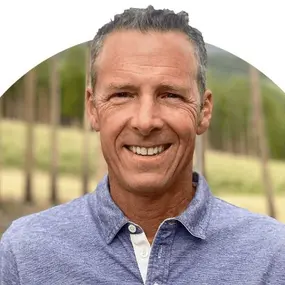
Owner & CEO
Eric Goldreyer is the CEO and founder of Savvy, a book-direct marketplace that connects travelers with professionally managed vacation rentals without the traditional OTA service fees.
Through Savvy, Eric is focused on making direct booking easier for travelers to discover, trust, and use, while helping professional property managers build stronger guest relationships and earn more from each reservation.
With deep experience across vacation rental management, hospitality, and online travel, Eric brings a unique perspective to the direct booking conversation and the future of how travelers find and book professionally managed stays.

Founder & CEO
Orlie Benjamin knows what it's like to lay awake at night worried about a potential 1-star review. As both a hands-on property manager and former Fortune 500 marketing executive, she built Lasoh because she was tired of cobbling together spreadsheets and generic tools to manage marketing strategies.
Before founding Lasoh, Orlie found herself in the trenches of property management, dealing with everything from last-minute cancellations to guests who couldn't figure out the smart lock. But her background at American Airlines, Victoria's Secret, and NetJets showed her what sophisticated guest relationship management and marketing could look like. She realized vacation rental operators were stuck with tools designed for hotels or generic CRMs that didn't understand their unique challenges.
Now she's on a mission to give every property manager, whether they have 2 units or 2000, access to the same marketing technology that billion-dollar hospitality companies use to build guest loyalty and maximize revenue.