Stop Calling It Luxury: Setting the Standard in Vacation Rentals with Nir Maimon


Last week with Moriya Rockman, we explored luxury through the lens of growth, relationships, and what it takes to scale a high-end portfolio without losing the hospitality at the center. This week, Nir Maimon brings the conversation to the definition itself, what “luxury” should mean, how it should be verified, and why the category loses trust when the label gets used too loosely.
“Luxury” has become one of the most overused words in vacation rentals, and that is exactly the problem.
In this episode, Alex & Annie sit down with Nir Maimon, President and Co-Founder of The Maimon Group, to break down how he evaluates luxury with a practical framework that starts with the operator and ends with the asset. Nir shares why luxury cannot be treated as a marketing adjective, what happens when guest expectations fall short, and why platforms and operators need clearer standards if the category wants to keep its credibility.
They also get into what verification can look like in practice, why Nir’s team says “no” far more than they say “yes,” and how their approach to service, personalization, and systems supports the level of trust luxury guests expect.
Episode Chapters:
00:00 – Welcome to Alex & Annie: The Real Women of Vacation Rentals
01:11 – Nir’s background and what The Maimon Group does in ultra-luxury
02:18 – The core issue: “luxury” is being misused in vacation rentals
04:26 – Nir’s framework: luxury starts with the operator, then the asset
06:45 – How Nir scores luxury (location, layout, privacy, finishes, noise, access, amenities)
08:34 – The trust gap: what OTAs get wrong without verification
15:48 – LPMS and the travel advisor workflow (how trust gets protected in bookings)
24:02 – Big-event travel and why groups keep choosing homes
27:45 – Personalization at scale: CRM, surveys, and concierge ownership
31:10 – AI in hospitality: start with clean data, then layer automation with human validation
38:08 – Looking ahead to 2026: “deployment,” standards, and repeatable excellence
Connect with Nir:
LinkedIn: https://www.linkedin.com/in/nir-maimon-59024595/
The Maimon Group: https://www.themaimongroup.com/
LPMS: https://thelpms.com/
✨ Exclusive Offer to Alex & Annie Listeners:
Streamline your short-term rental operations with Hostfully.
Mention the Alex & Annie Podcast when you sign up and get free onboarding ($1000 value).
👉 Click here to get started: https://www.hostfully.com/influencers/alex-annie/
#vacationrentals #shorttermrentals #luxuryvacationrentals
00:00 - Meet Nir Maimon And The Mission
02:10 - What Luxury Really Means
06:45 - Creating A Luxury Score For Properties
11:20 - Trust, OTAs, And Vetting Standards
16:30 - Scaling Quality Across Markets
20:30 - Why LPMS Was Built
24:30 - Travel Advisors: Tools And Trust
27:30 - Big Events As Growth Engines
30:00 - Personalization, CRM, And Concierge
33:00 - AI, Data Lakes, And The New Stack
38:00 - Enterprise Tools And Growth Mindset
42:00 - Standards In Action And Closing
Alex Husner 0:36
Welcome to Alex & Annie:the real women of vacation rentals. I'm Alex and I'm Annie, and we are joined today with Nir Maimon, who is the president and co founder of the Maimon group, Nir, it's so good to see you. Good to see
Nir Maimon 0:49
you. Happy New Year. We're
Annie Holcombe 0:50
excited to start the year with you. So we got to see you at DARM back in December, and that was a lot of fun. And you are like the pickleball master, and I did find out you play tennis as well. So I'll be bringing my husband to the exec conversation is with you, but before we get started, why don't you introduce yourself and tell us a little bit about your journey in hospitality and to the Maimon Group.
Nir Maimon 1:11
Hi everyone. My name is Neil Maimon. Good to be here. Together with my brother Tom Maimon, we founded the Maimon group about six years ago. We managed ultra luxury properties based in LA we focus on concierge Realty guest experience, and we also develop a platform called lpms, which is a global marketplace for luxury property managers and travel advisors to work with each other.
Alex Husner 1:36
I love it. Now you've definitely got a really interesting pulse on what's going on in the business, not just directly in the vacation rental side, but I mean reaching out more into the travel advisors. And you know, you've obviously drawn a lot of influence from major hotel luxury brands and how you've built your company. When we were at DARM, we got to talk to you, and we heard, unfortunately, we had to miss it, but you were on a panel that was specifically about, like, what luxury means, and I've heard through the grapevine there are some different opinions on that, but I'm glad that you were on it, because I think everybody knows you're kind of like the Luxury Guy. But what was your take on it? And what were you surprised to hear that other people thought differently about the topic?
Nir Maimon 2:18
Think our biggest takeaway was the fact that the word luxury is being misused in our industry. I think there is an opportunity to define luxury in the vacation rental space. I think people just use it in different ways. We get the thing that some people think luxury, it's all about service. I think some people talking about luxury is different from market to market. We even heard that luxury is the way you react to certain issues. So I think it was exciting to be a part of that dialog, and we actually taking on a project now where we really want to help defining luxury for our platform and for our own business.
Annie Holcombe 2:59
I actually sat in on that session, and it was really interesting because it was Robin, Craig and from moving mountains, and then Rachel and rob all day from abode and yourself. And I think that it's interesting because I would look at each one of your types of inventory in your your portfolio as being luxurious for that market. But we had Alex, and I had had a conversation earlier in the day with Dennis goodheed from casiola, and we were talking about luxury with him, and one of the things that came up was that luxury is sort of a loosely defined thing. And yes, I think that we have to, we have to dial it in and really define what it is. But, you know, he kind of pointed out he went to stay at Sir Richard Branson's Island, and it's for him, it changed what he thought of luxury, because it wasn't so much about a posh destination, a posh resort over the top services. It was almost just like the experience of it was luxury, because all of a sudden, here he was living in this billionaire's island that, you know, people don't get the opportunity to so it was a different level of luxury versus, like, if you're staying in, you know, a $40 million home in Bel Air California, and you have Butler and chef and all these things. So I think that there's a lot of room, there's a lot of wiggle room in there, and it can be defined based on experience and on property type and probably on destination. But do you do you think, in trying to define that, that it becomes something where you have tiers of luxury?
Nir Maimon 4:26
I think there can definitely different markets of luxury, and I think luxury can be different from market to market. But I think what we're trying to do is is, and just to provide a little bit more clarity, for the last three years, we've been talking with a lot of luxury property managers across, you know, the United States and Europe, and we're trying to aggregate the best ones so I can book my clients, and I can recommend our Travel Advisor to book those specific properties. So we actually visit a lot of property managers. Over the years, we have talked with a lot of property. Managers over the years, and we really were asking ourselves, what is the definition of luxury? And at the same time, we're trying to build a business that is somewhat set the standards of what luxury is and where we are now on this discovery is that luxury really start with the property managers and the vacation rental or the hosts that manage that property. We create a list of items that they have to be to be able to be a luxury providers, and then you pair it with the property itself. So if you only provide services, or if you only, let's say you have a great instant communication, and let's say you're very proactive, or you have an amazing cleaning, not just a part of it. The other part of it has to be the property itself. Yeah.
Alex Husner 5:47
I mean, it needs to be nice, for sure. And, you know, I think about in times that I've used the word luxury and marketing, you know, it's a very different type of luxury than the type of properties that you're describing. So, like, if you take, and I guess that's kind of like, the question is, like, is beauty in the eye of the beholder? Of, you know, in Myrtle Beach a luxury four bedroom condo, it could be beautiful and very well taken care of and very nice, but it's never going to be equivalent to, you know, four bedroom home in the cliffs in LA, like, what you guys have. So how do you you know, especially as you guys branch out more with the lpms side, like, how do you balance that of like, you want to get properties that fit people at different budgets or reasons for traveling, you want to uphold a certain level of quality. But how do you not turn somebody off that, like, they're only expecting to have that cliffside home, and then they get to Myrtle Beach, and it's a condo, and they're not exactly thrilled.
Nir Maimon 6:45
That is a that is a great question. So once we've added the host, right, we define a specific host that is actually can become a luxury providers, right? And I can go down to the details of what it means to be a luxury host. Then let's specifically talk about this Myrtle Beach Condo on the water, right? So we start asking ourselves things like, where is that location, right? Is it a luxury location? Then the second thing we look at is, is it a luxury layout? Then the third things that we're looking at is, do we have privacy? Is there? Is it the luxury that there is enough privacy? Then we look at into the finishes of the property itself, right? So you can have a three bedroom condo that considered to be luxury, and even ultra luxury depends on the market. But we really, let's take a look at the finishes. Is it a marble countertop, or is it, you know, gravel countertop? Is it? Is the cabinets are melamine, compass wood, or are they actually solid, solid core cabinets? Is the form is natural stone, or is it ceramic? Top so you want to look at the property finishes. You want to look at the layout. You want to look at the privacy. You want to look at the scales. You want to look at the location. Is it sitting in a busy road where they can hear the cards, the cars running around, or there is a lot of stuff, or is it or he has a beach access? Can I walk down from that condo to the beach and have an amazing experience with my family, and then come back, and then we look at the amenities, what type of an amenities he has? So it's really a scoring system of this property with the relationship or the other properties within that market. That really helps you define is that is a luxury property or not. And then if you pair it with the right property manager, that's where luxury and we believe Magic's
Annie Holcombe 8:34
happen, yeah. How do you think the I think of it from the OTA perspective, because I think that that's where a lot of this kind of got off the rails. There are managers that are providing that level of service, and they have the intent that these, you know, the properties are going to have the amenities and you're going to provide the service, and they're going to have the furnishings and the finishings, but then OTAs don't have a good structure to be able to I think, you know, you do have a few Marriott homes and villas the Hyatt, like some of these, these ones that are trying to that, you know, they have a better ability to define that, but the OTAs are very loose about it, like, if I came and said, Well, I've got a brand new condo sitting on Panama City Beach, and it's a it's a penthouse, and it's brand new. I could say it's luxury, and they're going to categorize it luxury, but for it to compare against, again, a luxury home that has, you know, the travertine floors and the marble and the chandeliers and all, you know, all of the accouterments that you would want in luxury like you do. You see the managers helping the OTAs define this, because I feel like they're right now the OTAs are defining it, and that's where the problem ensues. Is you've got managers that are just loosely using the term, and therefore they kind of hijack the category. I guess would be the best way to say it.
Nir Maimon 9:50
I think the responsibility really falls on the again, if the OTA want to become a segment, OTAs and the OTA allow a property managers to. Put the word luxury on a listing, I think they should verify that it's actually a luxury properties for for their guests. You know, we're losing guest trust over the years because they loosely use of the word luxury. People goes in, they look at pictures, they look at the description, sometimes they even look at reviews, and then they show up, and the expectation just fall short, right? So I can give you an example of an LTA that actually is doing a great job. Let's Airbnb Lux, for example, are doing an amazing job, like when we onboarded to Airbnb Lux, they actually send in a team, and they vet us as a as a property managers, and then they vet every single property before they before they were publishing it on their platform. I think that's what it takes. I think you have to have a system in place, and you have to really look at if this property manager is actually in this host is actually a luxury, a luxury host, and if this particular properties is a luxury properties, and you have to have very clear checklists. You got to go line item by item. It says is, this is a luxury properties before I allow my platform or my audience to see the word luxury. And that's what we're doing with the MIMO group. We go out and we say no to maybe nine out of 10 every properties that's coming into our doors and that. And sometimes that's what it takes. And you know, all the owners thinks like the home is perfect. My home doesn't need anything. Go ahead, book it right now. You know, I can't wait making generate money for me. And we're like, No, unless you're putting x amount of dollars, and unless you're redoing those things. I can't call this home luxury
Alex Husner 11:43
Well, and, you know, at the end of the day, I mean, like you, your your role in that is really important, not just from protecting your company and your ability to maintain that brand, but also, I mean, the guests to have the right vacation. Because it's like, you know, thinking in my mind of places that I've gone on VRBO or Airbnb and booked a place. And, you know, I know, in my mind, based on the destination, what the nicest one could be. And I know, have an idea probably what the not nicest one could be. I'm looking for something that's, you know, above 4.5 4.5 to 4.8 nice pictures. Great reviews. But even when you look at just those things, sometimes when you get there, you're like, Oh, God, that other one I was looking at in comparison was probably way better than this. And, you know, there's still a lot of things that can't be kept up all the time, and photos can be deceiving, you know, over time. But I mean, that's that's really your role of being discerning, so that the guests come to you, they know if this isn't going to be, you know, one out of the 100 that are bad, they're all good. So it's like there's no wrong answers. And I think that's a really important part of what you guys do, 100%
Nir Maimon 12:47
and it's not easy. We have, you know, 150 hotels spread out sometime 2030, minutes apart, right? So how do you execute on that level of execution across, you know, 150 different hotels or different vacation rentals, right? And then when you start expanding outside your market, is like, how do you unify that level of quality in different markets? And then, if you start, you know, what we're trying to do is we're working with other property managers to book high net worth clients all over the world, like we booked a client in Vegas, right two weeks ago, and it was like unbelievable saying, but how do you ensure the qualities on those external market? And that's really the challenge, but at the same time, that's the opportunity, because if you'll be able to perfect that, I think there is a lot of opportunities to becoming that brand, to becoming that space for people can really trust, like, if I book with my mom, I know that I'm gonna get 1234, and I know that this two vacation that I'm booking this year actually going to be relaxing and accommodating, versus me dealing with like, the AC doesn't work and the gate doesn't open and the light bulbs, you know, is Not there. And, you know, I the neighbors, is, is pulling a parties or something like that. So those are the challenges that really at the same time, they're the opportunities for industry,
Annie Holcombe 14:10
yeah, and it kind of goes, I think it goes along with the industry at large, trying to define standards in general, like, I think that, you know, to your point of people losing trust with it. That is the biggest thing that the industry, I think, has the largest opportunity is, is confirming that trust. Hotels have it. Hotels have it from the roadside brand all the way up. However, I will say, my husband and I just had a trip and stayed at a Ritz Carlton, and my husband dubbed it The temu Ritz Carlton. So it was awful. Like, it was not a Ritz Carlton, and it was, it was a fine hotel, it was older, but it just wasn't the luxury that you expect at a Ritz Carlton. So, like, there's always going to be ones that fall short, but I think it just goes back to the basics of, like, how do you define standards of. Service and levels that that people can trust, and then you can do the categories. But I think that leading with the luxury is the right way to go, because everything falls below that luxury. And if you can define what luxury is, and everybody's clear on it, that anything short of that, you know, is close to luxury, but not luxury, and then, you know, it starts to fall into place. So I'm interested to see, like, where this conversation goes. But it sounds like you guys have had this sort of in your ethos since you started the miming group. This is something that you wanted to do so you've got some traction, and you've grown your business. And so I kind of wanted to, like, pivot over to what you're doing with this kind of collective. The lpms is lpms, right? Yes, yeah. So what? So how did that? How did that evolve out of what you're doing with my men when
Nir Maimon 15:48
it comes to lpms? The thesis behind it on the concept was like in it started with the MIMO group, so in high season, we found ourselves having more demands than supply. So we start booking
Alex Husner 16:04
period or what? When were we talking
Nir Maimon 16:07
2021, 2022, la got it. Yeah, we had more demand than supply. So we were like we were in our starting years, and we created great tractions. We created the brands, the travel advisors and real estate and partners really start trusting. They really like things like instant communication. One of the things we were really big and it's like we are instant responding 24/7 to our guests, to our owners. It was a part of our mission. So people really liked it. They liked the fact that we own it. They like the fact that we're 24/7 so they start driving more demands to us. But the challenge we had back then is we didn't have enough supply. Or I give you another example. I had a guest that comes into towns and they want a tennis court, and my home with the tennis court is booked. So what do I do? One is I say no to that guest, or lose that revenue during the high season. Or two, I go out to a property managers in my market that has a tennis court, and I go ahead and book them. So it started with that concept. MIMO group needed the ability to book other properties. Add to that, we worked a lot in the luxury space. You work a lot with like retro Rosso, or you work with a lot of like Travel Advisor groups that drive the men's to a tail, that start realizing that for group travel, it's much better to book a vacation rental so they want they reach out, and then the process of booking was very unaffected. You get a message what is available. Then you got to send them pictures. Then you get, oh, send me the pictures, non branded. What's the rate? How much commission Am I making? What's the amenities? It was too much back and forth. And the Travel Advisor cannot send your website to their guests, because they want to keep those guests with them. So we build lpms initially for the MIMO group, which is basically Hey Travel Advisor. Here's the ability to book my homes under your own brands. Your commission is already there. The pictures is already there. You see real time availability right there. And then, and then MIMO group, here's the ability to expand your supply with homes that you can offer to your own guests or to your Travel Advisor during high season. That's where lpms started. Through the years, it's evolving to this marketplace that currently has over 4000 properties in it has a large amount of travel advisors and other real estate agents that using that platform to book each other in the luxury space. So once you define luxury, once you aggregated the supply and once you provided the tools, that's where the magic happened.
Alex Husner 18:49
Yeah, and I think from the travel agents standpoint, I mean, for sure, they've just been chomping at the bits, wanting a way to be able to book vacation rentals that they know are going to be a good quality and satisfy the needs of their guests. But you know, you think about a travel agent that if they've got clients they've been working with for years in a lot of cases, so it's like, one wrong trip and like, they could lose that relationship altogether. So I understand, like, where the hesitation has been. I think it's a trust issue, but it's also a technology issue too, that the hotels have made it very easy that they know they can always give away 10% they can build a rate code that's got that, that they can give that to the travel agents, vacation rentals, not so much. I mean, like, if our, you know, average commission for homeowners is 20% you know, I don't know that I can give 10% away off the top on it. But there's certainly ways to get creative with it, especially when you're dealing with high dollar properties like this, that maybe that's too much to even consider as a commission. I'm not sure what would you say the sentiment is of travel agents that you're talking to now, like, are they excited about this? Like, kind of saying the same things that they've just been waiting for something like this to happen? Yeah.
Nir Maimon 19:57
So it takes time to develop the trust, just like anything. Thing, as you said correctly, they really value their client. Those clients, you know, sometimes they may book only a million dollars a year, and that's the whole annual income, and it may be with two or three clients. So trust is really, really important, but we are making some really good progress and developing that trust with them, and providing them the tools that they need, some of the fundamental principle that they really like about our platform is one, the ability to talk with the property managers directly. So we're not acting as a middle layer between the travel advisors and the property managers. Right. Travel Advisor can work directly with the property managers in the platform and book directly with the property managers in the platform makes a big difference to them. To rate parity, we're connecting straight to the PMS. We're moving all the rates, all the calendars, all the availability, everything is going straight to the Travel Advisor and then API connections and quoting functionality. The Travel Advisor can connect the website, their website directly with the platform to drive them in, and also able to create white label quotes for their guests under their brands within the system. So those are just some of the tools that we develop over the years to really make it easy, and we perfected it under the MIMO group. So before we open it to other market, we said, hey, let's just work with us so you get familiar with the system, and then slowly but surely, we open more and more markets for those travel advisors.
Alex Husner 21:27
We'll be back in just a minute, but first a word from our premier brand sponsor. Hello.
Speaker 2 21:31
My name is Jesse Lear. I'm the founder of epicurian furnished apartments here in Columbus, Ohio. One of the things that makes our company unique is that we operate fully in the midterm rental space, so we cater a lot to medical travelers, executives who are relocating families, who are in the middle of large renovations, folks like that. And we really strive to nail it when it comes to hospitality. That's our main goal. We've been using host fleet for about five years now, and we tried several other property management softwares before that. We really struggled to find one that would not only accommodate the uniqueness of our midterm rental business model, but also one that would be reliable and then come with a lot of the integrations that we needed with other softwares in order to automate what we were doing with a relatively lean team. Since we came on board with hostfully, we've really grown as a company, not only in terms of size, but also in terms of sophistication. As we pivoted into the midterm rental space and started to build a reputation in our local community. With that came the need to really be more sophisticated on the back end with how our automations work, because as a small company, we couldn't afford to hire 30 people right off the bat to take care of a lot of the tasks that needed to be done in order to deliver the type of service we were committed to. So in order to do that, we really needed great software partners who could help us put our best foot forward and automate a lot of recurring tasks rather than hiring a bunch of employees. And that's one of the things that host fully really helped us with and has helped us with as we've grown. One of the things that really made a difference for us in our partnership with host fully was when they started really working on the data analytics side of the software and in other words, helping hosts really get a better grasp on what their metrics look like in terms of average daily rate, RevPAR. So it's not only saved us a lot of time, it's allowed us to run the business in a way that's been a little bit more organized. I think from the very beginning, the setup process was very smooth, and then as we've grown, they've made it clear that they're very open to feedback. So there's actually a section of their website where users can log in and provide feedback and vote on certain changes and solutions, and they take them pretty seriously, from what I've seen, so it's pretty important for us to be able to sort of flex their software to accommodate what we're trying to do. The fact that they're willing to take feedback and add new features and tweak features to accommodate hosts like us is really one of my favorite parts of working with them. I recommend hostfully to people in my network all the time, because I see it as the perfect blend of affordability, features and reliability.
Speaker 3 23:45
Looking for a smarter way to manage your short term rental operations. Get started with hostfully and bring everything into one streamlined platform. Alex and Annie listeners get free onboarding. When you mention you heard about hostfully from the Alex and Annie podcast, click the link in the description to get started today.
Annie Holcombe 24:02
So curiosity, I've been working with some managers that are in some key markets that are going to be hosting the World Cup, and you've got, like, the double, the double thing to work on now is you've got the World Cup, but then you've got to have the Olympics in a year, or, I guess, yeah, a year, right? Two years. So are you looking at this as a way to grow your inventory? Because again, a lot of urban destinations are going to be part of this, but you're going to be catering to specific to the Olympics, thinking long range, some very high dollar travelers that are going to be coming in. And then the Olympics, obviously aren't going to be just in LA, they're going to be, you know, everywhere, kind of surrounding cities and things. And so I was just curious what you're doing to prepare, not only my men, but then the lpms that you know, growing the inventory relative to these, these big events.
Nir Maimon 24:52
So on the MIMO group side, we're hyper focused on global events and the US Olympic and. And the US Open all those great events are massive. Like for years, we're doing things like Coachella Formula One, those are mega events that we're really passionate about. So we're launching a new website in the next couple of months, and the new website actually going to show global events and going to show aggregated properties, luxury properties around those events for people to book. So for us and the brand global events is huge for lpms, we're super excited, because when people goes to this type of events and you have the team as well that go into those type of of events as well, hotel is just not good enough for that experience. Some people want to go together. Want to stay together. So a lot of travel advisors are coming to us and says, Hey, how do I find the best properties for those events? But also, when I book those properties, I may need some event tickets. I may need a chef. I may need a car I made. I may need to fly private to that for that, you know, specific location, and I need the SUV to pick me up from the airport. Those are the things that we're doing for them. Those are the things that is like, Hey, let me just connect you with the best property managers and the best supply within that market. And sometimes that supply can be the MIMO group. Sometimes that supply can be a different property managers that, you know, end up having a better properties than ours, and then let me connect you with all those services and really make sure you have everything that you need to have an Inspire experience day.
Alex Husner 26:33
Yeah, I love that, and I think especially with your types of guests, but also even beyond to a lot more wide range, I think guests are, they're wanting more. We've seen that year after year. And I think they're they're wanting more personalization. They're wanting, you know, more things that speak to them as why they're traveling and, you know, feeling happy and fulfilled. I mean, we talked about this the other day, that this is a especially in your case, this is a very big purchase for a lot of people or families, you know, and even if it's not the Uber luxury, depending on where you are, it's still a lot of money for where you are at that point in your life. And as the one that's booking the vacation, you don't want to be the one that the whole family hates because you picked the wrong house, and then the concierge was terrible, and you know, all those terrible stories that were here. But how does your guest services and reservation team approach this with people that are inquiring, and they come to your site and they're interested in properties, like, are you asking them upfront about what types of experiences they're trying to have when they get there? Or, like, what? How do you kind of make that bridge of not shoving it down their throats that you offer more than just the stay, but like, learning about them in a way that even if they don't book something else besides the stay with you, they feel like you actually, really know them, and have taken time to get to know them as a guest.
Nir Maimon 27:45
On that regard, first and foremost, we're using a CRM. We've been using a CRM from the beginning of time, and really, for us, capturing the data about our guests is super important. And in Today, modern age, there's so many cool tools that you can bring into your business to get even more information about your guests. But it's also to your point. It's about about it's all about asking. So we're we're keen on having a person to person conversation when somebody comes to us, and we are keen about talking to them over the phone or via text in the best forms and possible way that we can to get more information. We've been sending our guest surveys before even booking with us, just to get a better understanding of what they're trying to come and what they're trying to achieve. And then we build a team. We have a team of travel advisors, which is like our own inside company, travel advisors or or concierge that really are assigned to that clients and making sure that everything that their clients need is really being met from the moment they talk to us all the way to the moment they checked out, even though we may have different teams interacting with that client, that that concierge, that's, you know, that booking agent in our company, is following that client from the beginning to the end, and they are the one that facilitate all the data and put it into our system. They're the one that aggregated our own supplies to fit the right properties for the guests. They are the one that making sure we make the right recommendation when it comes to our concierge services, and they're the one that even stepping in and informing our guest experience team what type of gift basket will be the right fit for that particular guest when they come into the property. And for us, it works because people like to work with people. I like to have somebody that knows me, understands me, predict my needs, and I like the fact that I don't need to go and explain five different people along the way. Why am I coming down and what exactly I need? So that's what makes us special. So so our sales team, our reservationist, seems. They're really about building relationship now we are layering now different type of tools, but we are fundamentally key about people to peoples, and building meaningful connections with our guests, and really curating the whole experience from the beginning to the end.
Annie Holcombe 30:18
So how do you see? I think it's a nice pivot to AI, because that's where I mean, when we walked away from DARM, I think we were all kind of like, wait a minute, this was a data and revenue management conference, but it really got into AI is just taking over everything. But one thing that I think that a lot of people feel strongly about is that that human connection still needs to be part of it. After all, it's hospitality, and you get a machine is not hospitable. A machine can do the task, for sure, but the hospitality part comes from human nature. And so where do you think that my men group is going to be able to layer in AI to make you more efficient? I mean, I think that if you have repeat guests, obviously that's going to help, because you're going to know what they want, and they're, they're, they're the flavor that they're looking for when they travel. But how do you do that in a way that you can bring AI in to make yourself more efficient, but not lose that human connection? Just like
Nir Maimon 31:10
many business owners in 2026 we all like sitting down and like, how can I use AI to make my business more effective? And how can I use AI to become more successful? And we all have this notion of like, this is a massive opportunities. And if we're not looking at how to use AI in our business in 2026 we may become obsolete in two or three years, right? Because our competitors are going to do it, and they're probably going to do it better. So for the last couple months, we're spending a lot of time and money, figuring out, where can we use AI in our business to become more successful? And really, what it came down to, first and foremost, is we're changing our tech stack, right? I think in 2024 2023 the PMs has a lot of power. I think in 2026 PMS has less and less power. In my opinion. I think when you're looking at leveraging AI in your business, it's really starting with data, and it really starting with like, How can I can consolidate all of our data in a new 2026, source of truth, and in our perspective, from the research we've done and hiring expert in the fields to consult us on this. We believe that the new source of truth in our industry is really a data lake or a data warehouse, because you have data sitting, let's say, in your operation system, maybe it's a breezeway or and you have data sitting in your PMS, and you have data sitting in your CRM, and you have data sitting in your communication and you have data sitting on your AWS. That's AWS dashboard. So to really use AI, you got to start with, where is the AI going to get the data? And you really need to streamline the way AI get access to your specific data to empower you to do different things. So we the first and foremost when it comes to AI in 2026 we believe in, like, consolidate all the data and bring it all to a data lake. Then you start thinking about now that I brought all the data together, and some big companies in the industry is already doing it, and it's just amazing to see the value of consolidating the data and what they can do with AI in their business. But then you can start having the funds. Then you can start like, let me power my communication, but I still want the humans to validate before sending it. So humans are changing in 2026 from from the entity that actually does the work to someone that is actually validating the work, providing feedback and setting up the the direction so how to use AI and how to optimize, because they're the subject matter expert. So it's super exciting times. Things are completely changing.
Alex Husner 33:48
Yeah, well, I mean, you think about the last, I don't know, five years or so, maybe a little bit longer, of all these different property management systems that are in our industry. And I remember a few people put together an RFP to build, like, the best property management system out there. And I don't think it really went that far. But one of the main things that they ran into was, you know, how are we going to come up with this list of how amenities and how things are mapped and how they're you almost have to have that, like universal code that is applicable no matter what system language, country, whatever that you operate in. And it's just, it's not possible. I mean, you're trying, trying to solve for so many different things that, you know, an OTA that is mostly a lake based OTA is going to call things differently than an OTA that has ocean front or Gulf front properties. It's like, there's just the essence of doing business makes it more complicated. But I think you know, knowing how complicated that has been for our industry to solve, and I still don't think it's even solved, it makes me really worried about what AI will be able to do if people continue to operate on just like, let's get everything into a data lake, and now let's, let's parse it all together. My hesitation on it is okay, well. You know, it's garbage in garbage out. If they're getting bad data from other systems that are is in there, and now, if it's not updating based on the bad APIs that are set up there, you know, it's like, it's, it's hard to, it's hard to know if this is really going to be something that is, is viable, you know. And I'm not just saying that just because I work with boom, where everything is native, AI, but like, I think, you know, there's going to be a lot of different takes on how people pursue this, and I hope that there is a way that you can take older systems and and make them better. But I to me, I have to have to see it, to believe it, because I know what we've been through to get where we're at now.
Nir Maimon 35:35
Yeah, just for full transparency, we're on escape you as a PMS, which is a very, very, very old system, right? And yeah, we were searching. We really value what BMS does, and we've been talking with every single bigger players in the industry. We've been talking with track and guesty and streamline and constantly researching is like, are they can, are they able to bring me enough value to switch? And I think recently, they build unbelievable tech, and I think they're better today than where they were four or five years ago when we looked at them, but we kind of end up to a perspective of like using Enterprise solution system in our business. So for example, we we onboarded HubSpot as a CRM, we onboarded. We're looking at NetSuite as a trust accounting and operation system. I think when you get in and it's really lending down to, like, what size of a business you are, so if you're, if you're managing 3040, properties, and you don't need as much depth in your tech stack with all means, go with the centralized PMS. It's unbelievable. They have amazing solution for you. But when you start growing and you start looking into like, How can I take my revenue from this number to this number? Now you really need a little bit more depth. And we found that data lake developing AI engines using Enterprise solution like HubSpot and NetSuite, and really going to make a difference?
Alex Husner 37:09
Yeah, and I would agree with that for sure, of like the companies that are your size and growing, that also are doing different things within the business model, besides just renting properties, those are the ones for sure that we see more of that. They've had to kind of come up with some creative ways of doing it, because there is not a solution that is just, you know, can scale from five properties to 500 and being a channel manager and an OTA and a rental company, and that's what I count. That was my background for 13 years. So I certainly understand that too, but it makes it hard, you know, and there's not a it's not like the restaurant business where it's like, you know, there's only a couple vendors for food management and vendor management and everything else, and reservations. We've made it very complicated.
Annie Holcombe 37:51
Where do you see going into 2026 I mean, we're right at the beginning of the year. It's time to prognosticate and see where we're going to be at the end of this year. I think AI is going to be one of those subjects we're going to continue to chase. But going back to definition of luxury, how do you see that evolving in the next year?
Nir Maimon 38:08
2026 for us is the year of deployment. Right for the last couple of years, we've been building very, very strong fundamentals with lpms, with the MIMO Group, investing heavily in our peoples and our brand, I think for us, 2026 is where it's all going to come together. So leveraging lpms and really getting it to where it needs to become, focusing on definition of luxury, I think, is a massive opportunity. So we are taking it seriously and then also launching all those exciting tech project that we're doing, the HubSpot, the white label, the AI agent, the data lake, all of that coming together for our business, with the keeping our core and fundamentals there to take us through this transformation so really providing meaningful, personalized relationship to our guests, investing in our properties because, you know, there's so many shining objects that can grab your your attention, but it's really fall down to having unbelievable property. So we're doubling down on quality, right? We just hire new, two more property managers to join already existing, large teams of property managers within our company that goes out to make sure our properties are at top conditions, preventive maintenance, supply, fundamentals of what we do right? It's like, it starts with having an amazing product and then an amazing service, and then an amazing tech stack that makes it very easy and streamlined. And then it's like, how do we take it to the next level? Right? How do we really continue doing something that we're doing so well, and that'll do continue building our business now, a lot of people in 2026 I heard saying, like, I don't want to grow. Growth toxic or go is not a good thing. We believe growth is life if you're not growing. Going backwards. So for us, if we're not growing 30% year over year, we're doing something wrong. So we're really committed to growth, and we consciously breaking things and rebuilding things to be able to really execute on
Alex Husner 40:14
Yeah, yeah. Also, pursuit of excellence. You guys definitely have that before I reached out. And it's crazy that we haven't had you on the show to this point, because we've known you for so long. But I had seen a post from your brother, I think on LinkedIn, or might have been one that you shared, but you guys were showing your staff like the difference between like an exceptional property and a good property, and when everything on the counter is perfectly lined up and the logos are facing forward, and it made me think of my husband who yells at me that all the water bottles should be facing forward. I'm like, oh, okay, I didn't realize. Like, now I get it, but, but it does, like, when you're staying at somebody's, if you're staying at a hotel or a vacation rental, and you see, like, that level of detail that, like, clearly there was thought put in to make sure everything is exactly how it should be. It just it, like it hits you. It's like a feeling, you know, I mean, like beyond it, just feeling like luxury. It feels like it was intentional, like the actions that somebody did to make that happen. And it's, you know, comes back to intention and trust and just, you know, feeling good about where you're at. You guys have done a great job with it.
Nir Maimon 41:16
We keep telling our teams, you know, some of our guests are spending more than what we'll make a year on another vacation, right? So it has to it has to be perfect. It cannot be good. It has to be great. So I think you're talking about my brother showing this is good, this is great. And when you bring tal into the perspective, I couldn't do it without it. Tal is something I admired deeply when when we build this business, and something about him is it doesn't compromise on the quality. You know, I've been an entrepreneur for the last 20 years. I built companies, I sold companies, but sometimes I even found myself compromising on the quality because I couldn't deliver. So I give it my best shot. And if I was not able to deliver the level that I thought or I perceived that I need to deliver, I kind of lowered down my standard to kind of like, find my place. And something about that really made us who we are today. He doesn't come from it. He just like, this is where we need to be. Let's continue. I understand. It's a process. Nobody's perfect. We're dealing with everything that everybody property managers are using or not using, are dealing with like so we're dealing with, you know, things doesn't work. We're dealing with owners that don't want to pay for things. We're dealing with the same stuff that most of property managers are dealing with, but we are constantly trying to find a way to deliver it where we need to deliver, and we never, never, ever lower our standards. So we are, like, constantly pushing our team and constantly pushing our business to get to a point that we really redefine luxury in our space, and that's exciting, and we found really unique ways over the years to achieve on it something that we never thought is possible. And our managers and our staff, this is no way. There is no way we can onboard a home in four days. Guess what? Last week, we onboard a home in four days, and it was perfect, because we build all those processes and the inventory and the team and the staff and the SOPs and the checklist that we were actually able to onboard a home that had no furnitures to fully operating properties. Wow. Four days, impressive.
Alex Husner 43:35
I mean, four days even, because I know these homes are big, that's a lot, even if it's furnished, but if it wasn't furnished too. Wow. That's congratulations.
Nir Maimon 43:44
It took us five years, but here we are, and it was a huge celebration for us, because, you know, we kind of measure it. The first time we tried it, it took us two months, and you just keep getting better and better and better every time you're doing it well.
Annie Holcombe 43:57
Then it goes back to that, that statement of like, you know, all your growth happens in really uncomfortable places, and you had to get uncomfortable with with trying to seek perfection and not compromising at to know that you could do it, and then you can replicate it over and over and over. And it just gets easier, because it's just part of it, just ingrained in your team and everything that you do. So it's been impressive to watch you guys, and it's been wonderful to get to know you and just enjoy talking with you. And I love your perspective, and I can't wait to see where this all goes. And you certainly always have a platform to come on, Alex and Annie and talk about luxury. We are. We are proponents of trying to make definitions for the industry that we're building, fans of luxury. So if you need anybody to test out private jets or chefs anytime, I was
Alex Husner 44:45
very happy to do that. Very high standards for you. Yeah, yeah.
Annie Holcombe 44:50
But congratulations on everything that you've done. It's very impressive.
Nir Maimon 44:53
Thank you. We couldn't do it without our amazing team and the passion and dedications I really love what you guys are doing. In this community really supported us, like I was the new guy in the block, and I was walking around and Alex was like, hey, who you are, and always happy to people. And that's what beautiful about our industry. People are sharing and people are helping and people are supporting. And even today, I'm depending on shows like you guys to give me new ideas and peers in our industry to teach us what they do that works well for them so we can take it to our business. So thanks so much for having me on the show and happy 2026
Alex Husner 45:30
Yeah, awesome. Well, if anybody wants to get in touch with you near what's a good way for them to reach out?
Nir Maimon 45:35
Yeah, I'm on LinkedIn, so just shoot me a message. I'm pretty active, and I'm usually responding to everyone,
Alex Husner 45:42
okay, and if they want to hear about lpms, where do they go on that?
Nir Maimon 45:46
Yeah, you can go on dlpms.com just submit requests for a demo, and our team will be in touch. And also, you can always reach out to me and I'll connect you with our team.
Alex Husner 45:57
Perfect, awesome. Well, thank you for coming on near and for everybody listening. If you want to get in touch with Annie and I, you can go to Alex and Annie podcast.com and until next time, thanks for tuning in, everybody. You.
Transcribed by https://otter.ai

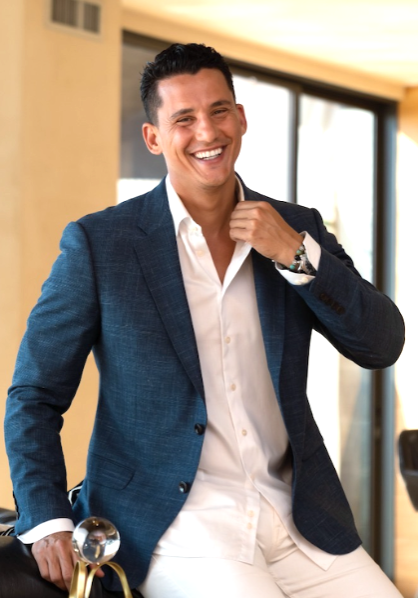
Co-Founder & President | The Maimon Group
Nir Maimon is the President of The Maimon Group, where he leads a portfolio of luxury property management and rental services focused on delivering high-standard experiences for owners, guests, and partners. His background spans entrepreneurship, sales, management, and business development, including success in the green energy sector and multiple acquisitions.
He is known for a data-driven, integrity-first leadership style and a strong focus on operational excellence. Nir is also the co-founder of the Luxury Property Management System (LPMS) platform, where he works closely with industry professionals to build practical solutions that support trust, collaboration, and sustainable growth in the luxury short-term rental market.