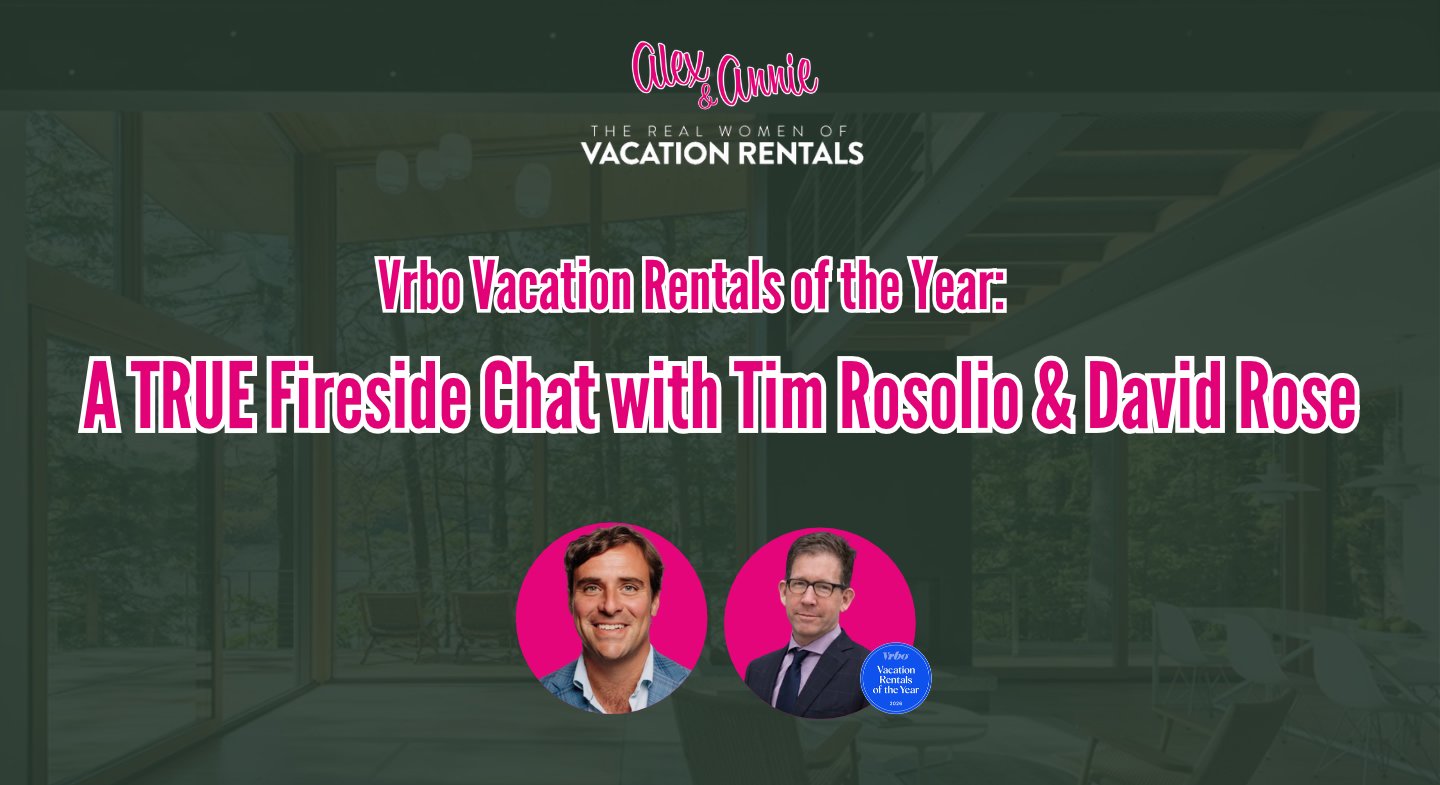
Vrbo Vacation Rentals of the Year: A TRUE Fireside Chat with Tim Rosolio
What makes a vacation rental truly stand out?
It is a question every host and property manager has asked at some point. Is it the design? The reviews? The amenities? The location? The way guests feel when they walk through the door?
In this episode, Alex & Annie sit down by the fire with Tim Rosolio, Vice President of Vacation Rental Partnerships at Vrbo, to talk about Vrbo’s Vacation Rentals of the Year and the standards behind the recognition.
Recorded at Lakefront Escape on Squam Lake in New Hampshire, one of this year’s winning properties, the episode also features owner David Rose, who shares how intentional design, intuitive technology, and personalized guest recommendations all contribute to a more memorable stay.
What VRBO’s Vacation Rentals of the Year Recognizes
According to Tim Rosolio, Vrbo’s Vacation Rentals of the Year program began with Stayz, Expedia Group’s Australia business, before expanding globally. Today, the program highlights standout homes across multiple countries and gives Vrbo an opportunity to showcase more than beautiful properties.
It is also a way to recognize the hospitality behind those homes.
As Tim explains, the award is not just about the house itself. It is about the people and teams delivering the experience. That distinction matters, especially in a category where travelers are not only booking a place to sleep. They are booking the setting for family memories, special occasions, and time away from their regular routines.
How VRBO Selects Its Vacation Rentals of the Year
The selection process starts with data.
Tim shares that Vrbo looks at key performance indicators such as strong review history, consistent five-star feedback, and reliability. Homes that cancel on guests or fail to meet guest expectations are not going to make the first cut.
From there, the process becomes more layered.
Vrbo’s local market teams help identify properties and partners that stand out in their regions. These are people who understand the markets, know the partners, and spend time looking at homes every day. The marketing team then evaluates the visual fit of the home and the story behind the host or property manager.
That combination of data, local insight, guest feedback, and storytelling helps Vrbo narrow the field from roughly 2 million properties to a select group of winners.
Great Hospitality Can Come From Any Type of Operator
Vrbo’s Vacation Rentals of the Year are intentionally a mix of individual hosts and professional property managers.
Tim makes it clear that the category is not limited to one type of operator. What matters is whether the guest experience meets a professional standard.
For individual hosts, the story may center on one home and the personal care that goes into every stay. For property managers, the challenge is often delivering those same personalized moments at scale.
Both can work.
The common thread is the ability to make the stay feel special to the traveler.
Why the Guest Experience Goes Beyond the Home Itself
A beautiful property can get attention, but the experience is what guests remember.
During the conversation, Tim talks about how the best hosts and property managers create moments that make travelers feel something. In an industry increasingly shaped by data, process, and technology, that human element still carries weight.
Guests may notice the view, the design, or the amenities first. Over time, they remember how easy the home was to use, how prepared they felt when they arrived, and how well the stay fit the reason they traveled in the first place.
That is where hospitality becomes more than a checklist.
Meet Lakefront Escape on Squam Lake
The second half of the episode brings that idea into focus through David Rose, owner of Lakefront Escape on Squam Lake in New Hampshire.
David shares that his family bought the property after looking for a lake home that reminded him of the way he vacationed growing up in Wisconsin. The location also had family significance, as his parents had honeymooned on Squam Lake.
The original home needed significant work, so David and his family partnered with an architect and rebuilt the property in 2017. The result is a lakefront retreat designed to host multi-generational groups, with spaces for gathering, reading, relaxing, and enjoying the outdoors.
Designing for Connection and Space
One of the most interesting parts of David’s approach is how intentionally the home was designed for group travel.
He explains that when people spend a weekend or vacation together, they need places to gather. A kitchen island, dining table, fireplace, or activity area can bring people into the same space.
At the same time, guests also need places to step away.
Lakefront Escape includes small “getaway zones” throughout the property, including quiet decks, reading spots, lakefront seating, a hot tub area, and other spaces where guests can enjoy a moment of privacy without leaving the group entirely.
That kind of design understands how people really travel together. A great vacation rental does not only create togetherness. It also gives guests room to breathe.
Why Intuitive Technology Matters
David comes from a tech background, but his approach to in-home technology is refreshingly simple.
Instead of filling the property with complicated systems, he focused on making the home easy to use. He describes the goal as creating something closer to an “anti-smart house,” where guests are not forced to learn a new interface while they are trying to relax.
The stereo, Apple TV, microwave, doors, and other features are designed or labeled to reduce friction. Small notes and simple instructions help guests understand how the home works without frustration.
For operators, that is a practical lesson. Technology should support the stay, not interrupt it.
The Power of Thoughtful Labels and In-Home Guidance
One of ways David makes his property intuitive and warm is their use of labels throughout the home.
Labels show guests where things go, how doors work, how to use the TV, and how to navigate features that may be unfamiliar. It sounds simple, but it solves a common vacation rental problem: guests arrive tired, distracted, and unfamiliar with the property.
Clear in-home guidance reduces questions, prevents frustration, and helps guests settle in faster.
It is a small operational choice with a big impact on the guest experience.
Personalized Recommendations Make the Stay Feel More Local
David and his wife also put a lot of thought into recommendations.
Rather than offering generic suggestions, they try to understand who is coming, what the guests are interested in, and what kind of experience would fit the group. That may include recommendations for hikes, restaurants, activities for kids, seasonal experiences, or even the best time of day to see a loon on the lake.
David describes better vacation experience design as guidance that is specific to the guest, the season, the weather, and the time of day.
That level of detail helps guests experience the destination in a more personal way.
Designing for Discovery
David also shares the influence of Japanese architecture on the home, particularly the idea of progressive discovery.
Instead of revealing everything at once, the property is designed to unfold gradually. The path to the home, the materials underfoot, the entry sequence, the ceiling heights, the window placement, and the views all work together to create a sense of arrival.
Guests move through the space and discover the home in layers.
That same philosophy extends to the way the lake and landscape are experienced. Rather than clearing everything for one big view, the design allows the surroundings to reveal themselves over time.
It is a reminder that memorable design is not always about making the biggest statement. Sometimes, it is creating moments guests discover for themselves.
What Operators Can Take Away From This Episode
This episode offers a strong reminder that award-winning hospitality is not built from one single feature.
It comes from the way everything works together.
For hosts and property managers, the takeaways are practical:
- Make the home easy to use.
- Think about how different guest groups will move through the space.
- Use design to support both connection and privacy.
- Provide recommendations that feel specific, not generic.
- Remove friction wherever possible.
- Create small moments guests will notice and remember.
Whether you manage one home or an entire portfolio, the standard is the same: deliver a stay that feels considered from the guest’s point of view.
Final Thoughts
VRBO’s Vacation Rentals of the Year highlights properties that perform well, earn strong guest feedback, and tell a compelling hospitality story.
The experience at Lakefront Escape illustrates how these principles are applied effectively in a real-world setting.
From the design of the home to the way guests are guided through the experience, David Rose has created a property that reflects care, usability, and a strong sense of place. Paired with Tim Rosolio’s perspective on how Vrbo evaluates standout homes, the episode gives vacation rental professionals a clear view of what it takes to create a stay worth recognizing.
Listen to the full episode here: Vrbo Vacation Rentals of the Year: A TRUE Fireside Chat with Tim Rosolio
Introducing IRIS: A New Era of Vacation Rental Business Intelligence with Chris Walker